

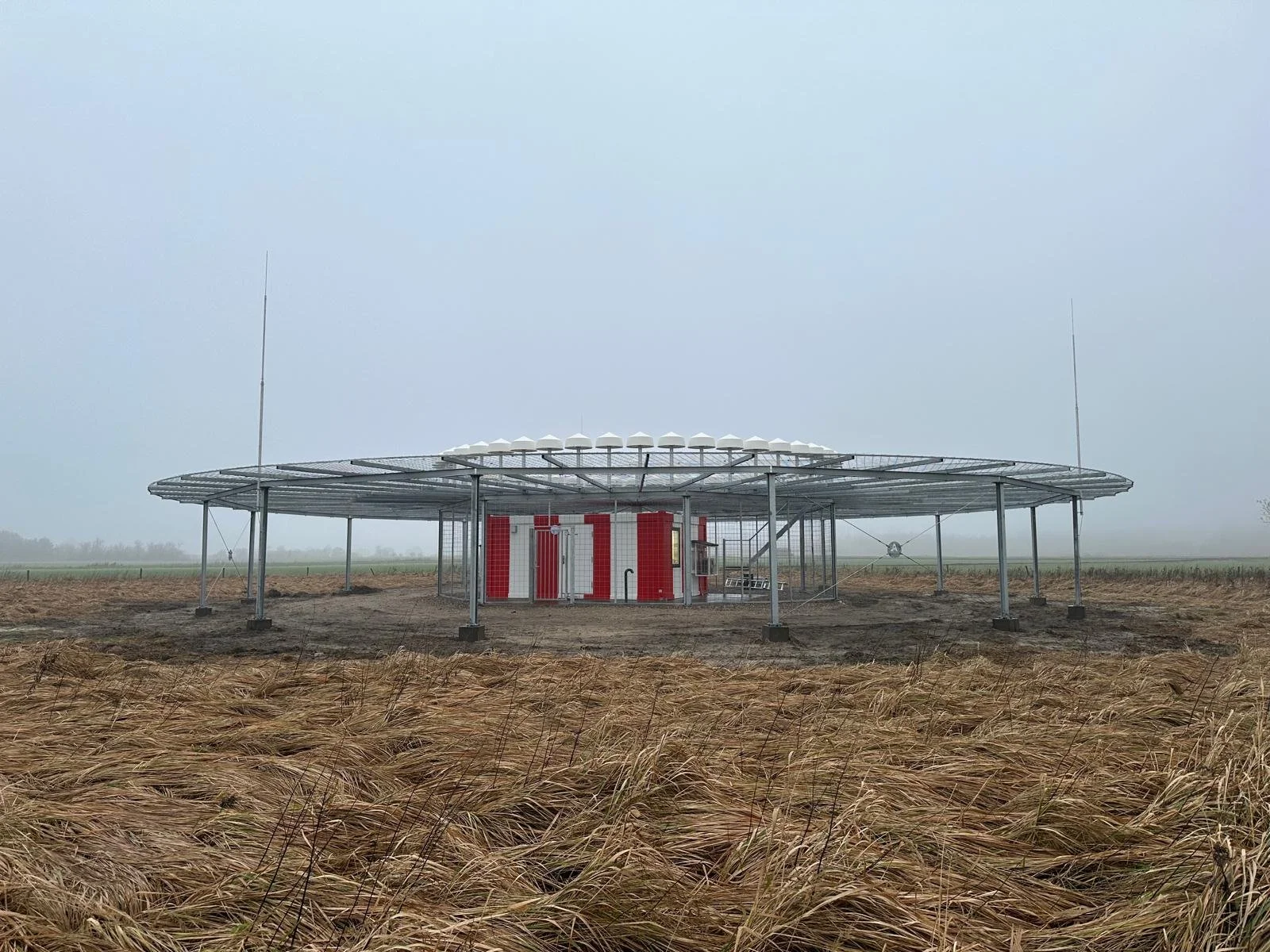
DVOR Counterpoise
DVOR and CVOR Counterpoises
AviNeering design, manufacture and install the elevated ground planes that DVOR/CVOR and TACANS systems stand on, and we have delivered 42 of them to 21 countries since 2016.
The counterpoise gives the antenna array a defined, predictable reflecting surface. Get it wrong and it shows up in the flight inspection, as bearing errors no amount of adjustment at the transmitter will correct. So we treat the counterpoise as part of the navigation system rather than as civil works that happen to sit underneath it.
Designed for the site, not the catalogue
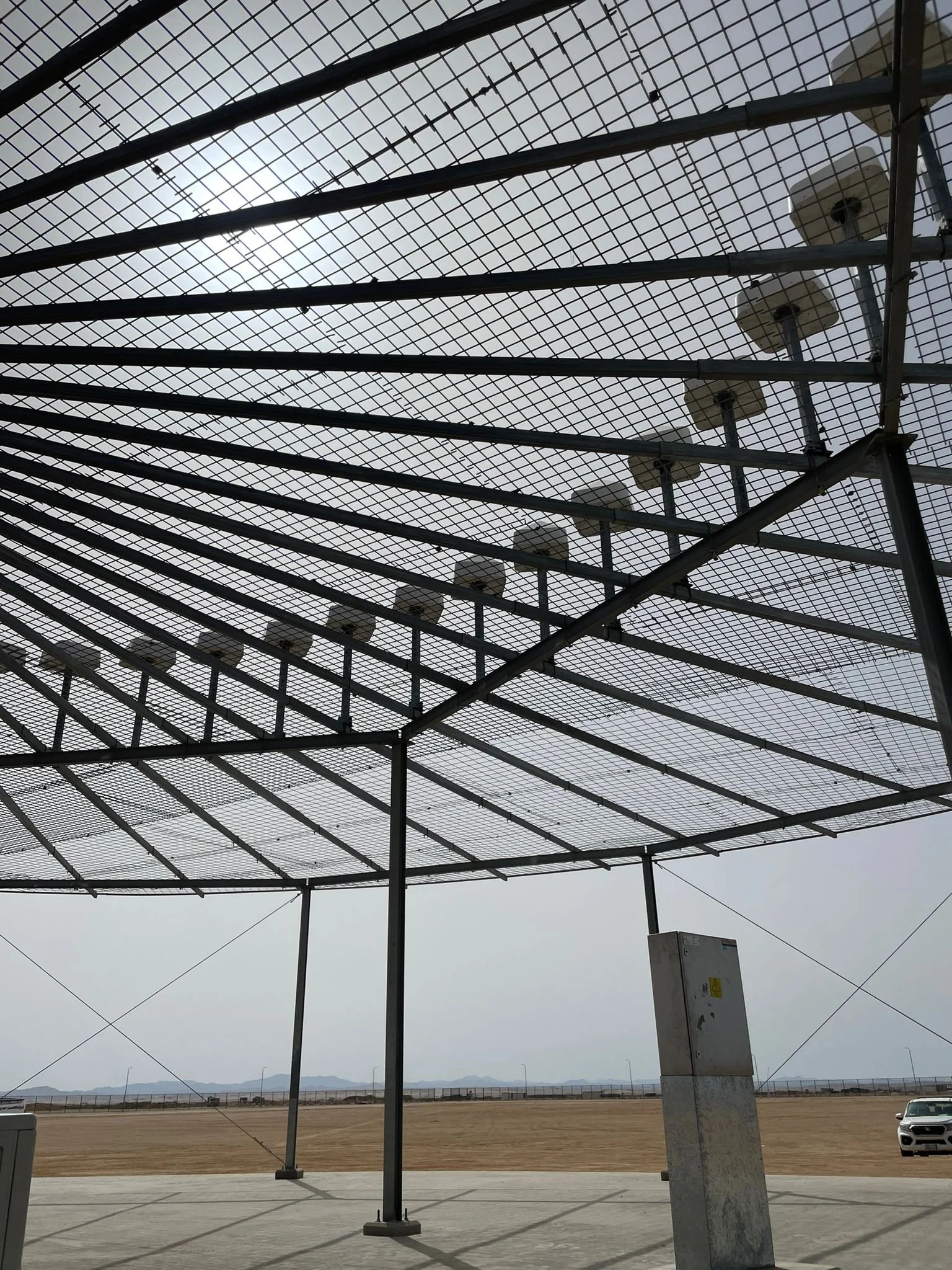
Four models cover the range of conditions our customers actually build in:
CP-01 — the general standard, for sites with little or no snow. Available in a braced variant for hurricane-prone regions.
CP-02 — for atmospheric icing and snow, with the full surface walkable for maintenance.
CP-03 — the VORTAC variant, with a continuous circular plate that serves as the floor inside the TACAN radome.
CP-04 — without a centre mast, where an equipment building or other structure needs the space beneath the platform.
Platform heights from 0.5 to 10 metres, and stair configurations to match
Verified, not assumed
The structure is verified to Eurocode with a deliberately harsh reference case — an airport above the Arctic Circle with a 3.5 kN/m² ground snow load.
Design wind 200 km/h as standard, up to 300 km/h in the fully braced variant
Atmospheric ice loads to ISO 12494, ice classes R3, R5 and G2
Snow verified both for normal accumulation and for the bridging case, where wet snow freezes across the mesh openings and turns an open surface into a solid one
Maintenance access verified with the platform still carrying snow and ice
Antenna positions held to ±6 mm under static load, ±10 mm at maximum design wind
Built for efficient installation
A big cost driver for buying a counterpoise is the days on site required to install it. AviNeering Counterpoise is engineered with the following considerations:
Slide-in assembly. Minimal bolted connections, and no specialist lifting equipment in most situations.
Integrated cable protection. The hollow structural profiles are the cable ducts. Cables run from each antenna to the shelter without external conduit or trays.
Stairs, not a ladder. The full area inside the sideband antenna ring is walkable, so every antenna can be reached without fall-arrest equipment